
August 31, 2026
Loneliness and social isolation are now recognized as serious threats to physical health in older adults—not just emotional ones. Research has linked chronic isolation to a higher risk of heart disease, stroke, and dementia. It weakens the immune system, disrupts sleep, and elevates levels of stress hormones that, over time, cause real damage to the body.
For older adults specifically, the risks compound quickly. Cognitive decline accelerates without the mental stimulation that regular social interaction provides. Depression and anxiety, two conditions linked to poorer physical health outcomes, become more likely. Appetite often suffers, leading to nutritional deficiencies. And perhaps most dangerously, isolated seniors are less likely to notice or report changes in their own health, meaning conditions go undetected and untreated longer. What begins as simply spending more time alone can snowball into a serious decline in both mental and physical well-being.
Senior living communities can be an ideal solution to older adult isolation. Today’s senior living communities are thoughtfully designed around connection, purpose, and well-being. They are, at their best, genuinely vibrant places to live. Here’s why senior living can be a great choice for older adults who aren’t getting enough socialization at home.
The barrier to participation is low. Forget your idea of nursing homes from the past. Modern senior living communities cater to a variety of hobbies and activities, some even led by the residents themselves! Whatever your loved ones’ interests are, there’s likely a community that caters specifically to that interest. And the best part—they can be literally just steps away from a resident’s front door.
“We just had a luau, and the life enrichment team did such a great job that almost all our residents showed up to take part,” said Scott Ernst, Community Relations Director at Fieldstone of Marysville. “Margarita and her team get to know each one of our residents and make sure there’s a place for them in each of our activities, whether it’s bingo or a movie. You don’t even see participation levels like that on a cruise ship. It’s a blessing to see how they operate. Our team really is the best.”
Assistance is always available. Home health care can be a big help to older adults who are isolated at home, but it has its limits. If older adults are reliant on in-home caregivers for transportation to activities or help with meal preparations, their social circles can continue to be painfully small. Senior living communities have round-the-clock care available right where older adults live.
“Even if a person is being supported with in-home care, laundry and cleaning alone are not going to fully engage that person,” Ernst said. “Our team works to engage each of our residents one-on-one.”
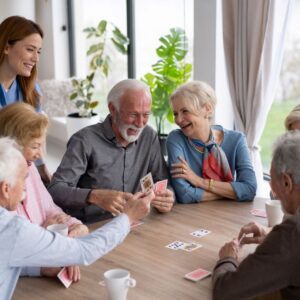
Communal dining promotes socialization. Dining, often the loneliest hour for someone eating alone at home, becomes a social anchor. Meals are shared. Conversations happen naturally. New friendships can form over the same table where last month you barely knew anyone’s name.
“They are very cautious at first, a little standoffish,” Ernst explained. “It usually takes two weeks for someone to adjust to the community. Someone further along in their dementia may need a little more time, but our staff is trained to engage residents no matter where they are on the spectrum.”
Safety brings peace of mind. One of the stressors of aging at home alone is the worry that comes with it, for both the older adult and for their family. Senior living communities offer built-in safety features, emergency response systems, and attentive staff, so older adults can live more freely and families can worry less.
“Seeing is believing, and our life enrichment staff makes sure all those pictures of our activities are uploaded to the LifeLoop system so families can see their loved ones are engaged,” Ernst noted.
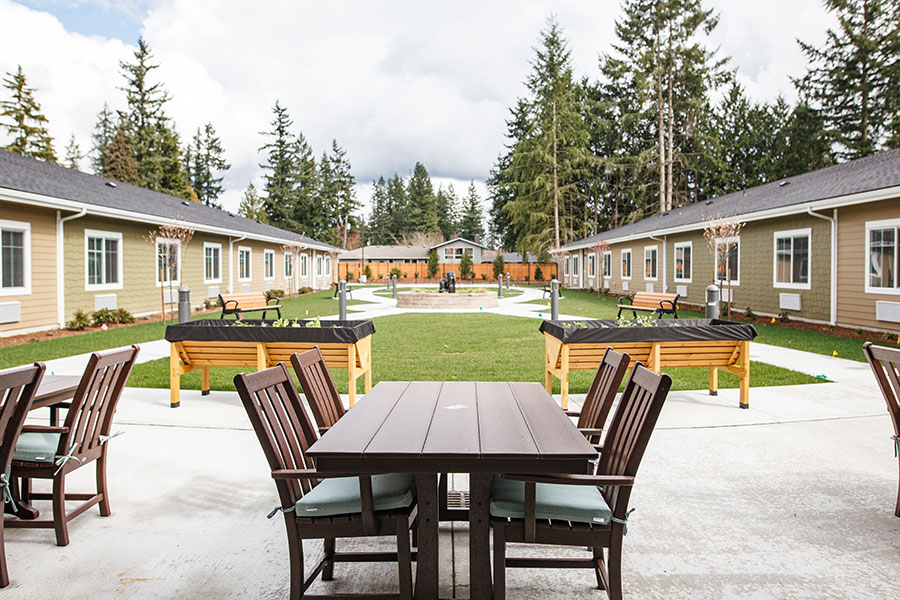
Pets, gardens, and shared spaces create daily joy. Many modern senior living communities offer beautifully kept grounds, community gardens, and common areas designed for comfort and conversation. These shared spaces give residents reasons to get up, get out, and engage with the world around them every single day. And those spaces also offer opportunities for families to connect and engage.
“We had about eight small children participate in the luau, with a ton of family members there too,” Ernst said. “That’s an intergenerational thing. They had such a good time. One of the kids met another young person, and we saw later that they connected through video games. We want to reach both our residents and their families.”
A built-in social network from day one. Making friends becomes harder as we age. Senior living communities solve this by surrounding residents with peers at a similar stage of life, with shared experiences and plenty of time to invest in new relationships. The friendships that form are often among the deepest of a person’s life.
Mental engagement keeps the mind sharp. Beyond physical activities, many communities offer lectures, book clubs, lifelong learning programs, and opportunities to mentor or volunteer.
The choice to move into senior living is rarely an easy one. But understanding that it’s a choice that can offer us a host of health benefits and an exciting next chapter can make it feel less like giving something up and more like stepping into something better.